
The contract is drafted in Word and sent by email. Someone then prints it, signs it, scans it and sends it back. In many small businesses, this is still what ‘digital’ signing looks like. It may work while everyone is in the same office. But when a new employee is in another city, the director is travelling and a supplier has no scanner nearby, the document can sit unsigned for days.
A qualified electronic signature, or QES, closes that loop without paper. Yet many businesses still assume that the other party must already have a certificate, smart card, card reader and signing software. That no longer has to be the case.
What is a QES and what can you expect from it
The EU’s eIDAS Regulation, Regulation (EU) No 910/2014 as amended by Regulation (EU) 2024/1183, recognises three levels of electronic signature: simple, advanced and qualified. A QES is the highest level. It is based on a qualified certificate issued by a qualified trust service provider and created using a qualified electronic signature creation device. The Regulation expressly gives a QES the equivalent legal effect of a handwritten signature. This applies across all EU Member States; recognition outside the EU depends on the law of the relevant country.
For day-to-day business, this means that a document signed with a QES does not need to be printed ‘just in case’. It does not mean that every document requires a QES. A lower level may be appropriate for internal records or acknowledgements of receipt. A QES is particularly relevant where a handwritten signature is required, where legislation prescribes written form, or where the evidential risk of a later dispute warrants the highest signature level. The exact requirement should still be assessed for the document and jurisdiction concerned.
Before issuing a qualified certificate, the provider must reliably verify the signatory’s identity. This allows the signature to be linked to the person who created it. A QES therefore identifies the signatory and makes subsequent changes to the signed document detectable. It does not, by itself, prove that the person is authorised to sign on behalf of a company. Authority to represent the business, including any financial limits, still follows from company registers, powers of attorney and internal approval rules. Identyum Sign can also associate the document with the recipient company’s Croatian personal identification number, or OIB, and check whether the signatory is recorded as its legal representative in Croatian registers.
The other party does not need anything in place beforehand
For a long time, using a QES usually meant obtaining a certificate in advance, receiving a token or smart card, buying a card reader and installing signing software. Asking a new employee or a small supplier to sign electronically first meant explaining that entire setup. Many people understandably chose paper instead.
Remote certificate issuance removes that preparation. A person who does not yet have a qualified certificate only needs a mobile phone or a computer with a camera, together with an identity document. After opening the signing link, the signatory completes remote identity verification, creates an Identyum ID Wallet in the browser without downloading an app, and stores the qualified signing certificate in the wallet. The process typically takes only a few minutes, after which the person can immediately sign the document that was sent.
This matters because the business no longer depends on whether the other party has already adopted electronic signing. The certificate remains in the ID Wallet and can be used for subsequent documents while it is valid. An Identyum qualified certificate is valid for three years.
Certificate issuance is subject to a fee, so it is sensible to agree in advance who will cover the cost, particularly when asking an external partner to sign.
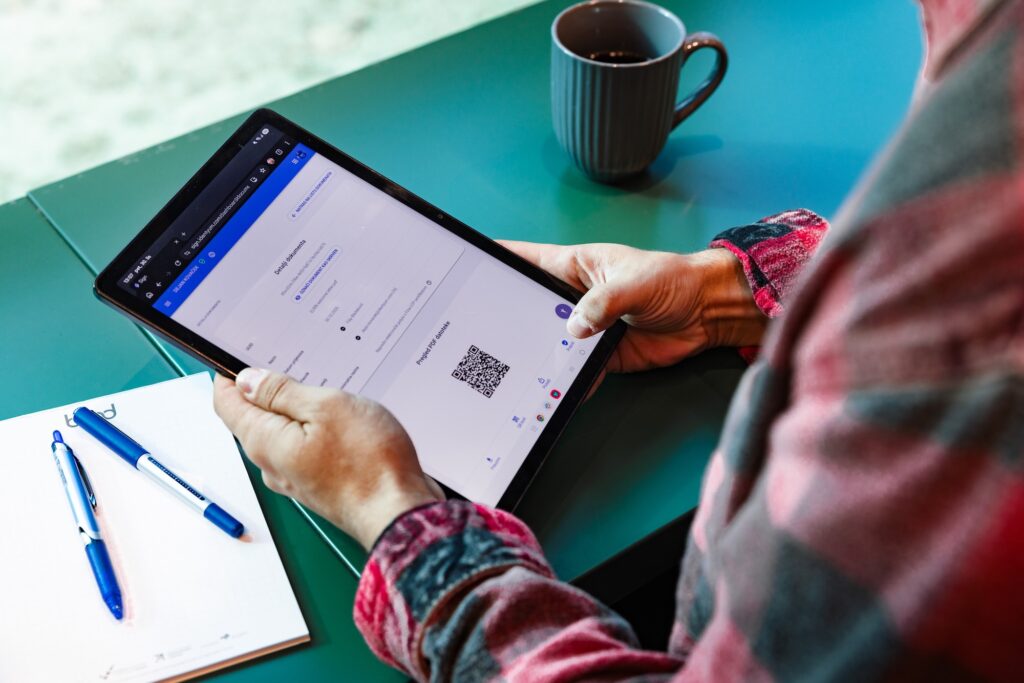
How the process works in practice
1. The sender opens the Sign web portal, uploads the PDF, selects one or more signatories from the address book or enters their email address or mobile number, assigns each signature position and selects Send. Each signatory receives a link by email or SMS, depending on the contact method chosen.
2 .The link can be opened on a phone or computer. Nothing needs to be installed in advance for camera-based identity verification.
3. If the person does not yet have an Identyum ID Wallet, successful remote identity verification creates their personal browser-based wallet. Identity verification is a required part of issuing a qualified certificate.
4. The certificate is issued to the signatory and stored in the ID Wallet.
5. The signatory returns to the document and signs it with a QES.
A person who already has a suitable certificate skips the wallet creation and certificate issuance steps and proceeds directly to signing.
Where SMEs can use QES most effectively
Ugovori o radu. Novi zaposlenik često potpisuje ugovor prije nego što je ijednom došao u ured. Poslodavac mu pošalje poveznicu, a on certifikat izradi istog dana, na svom računalu/ mobitelu. Zakon o radu traži pisaEmployment contracts. A new employee often signs before visiting the office for the first time. The employer sends a link, and the employee can create the certificate on the same day using a phone or computer. Croatian labour law requires employment contracts to be concluded in writing. In a Croatian-law context, a QES provides the eIDAS legal equivalence to a handwritten signature; an AdES does not carry that same automatic equivalence. The requirements for the specific document should nevertheless be confirmed before implementation.
Business travel orders. The employee may be on the road while the approving manager is in the office or travelling elsewhere. Instead of waiting for both people to return, they can sign from their current locations.
Internal documents. Management decisions, internal policies, confidentiality statements and minutes may require several signatures. These processes often reveal how much time is lost while paper moves between desks.
Supplier agreements. A small supplier may not have an electronic signing system. With remote certificate issuance, the supplier receives a link, creates the certificate and signs without a token or card reader.
Customer agreements. A transaction can be completed remotely even if the customer has never used an electronic signature. Before sending the document, agree who pays for the certificate and how each party will receive and retain the signed copy.
Some transactions are subject to notarisation, a notarial deed or another special statutory form. A QES alone does not replace those formalities. The required procedure must also be completed, including through an authorised electronic notarial process where Croatian law and the relevant service allow it.
What to agree before the first signature
The technology is straightforward, but the business still needs to make several decisions. It is best to settle them before sending the first signing link:
- which documents require QES and where a lower signature level is sufficient
- who may initiate a signing process
- who may sign on behalf of the company and within which financial limits
- who pays for the certificate when the other party does not yet have one
- where the final document is stored, who may access it and how long it is retained
For employment contracts, business travel orders and other documents governed by specific rules, a one-time review by legal counsel or an accountant can confirm that the selected process meets the applicable requirements. Once the process is defined, it can be repeated consistently.
The biggest change that remote QES brings to a small business is not simply the removal of paper. More importantly, the business no longer needs to wait for the other party to be prepared or to know in advance whether that person already uses electronic signing. An employee, supplier or customer can obtain a certificate when the document arrives, using a camera-enabled device and an identity document.
If you are considering QES, start with one type of document that currently causes the most delay, such as business travel orders or contracts for new employees. Define the rules, test the process on a small number of cases and then expand it to other documents.